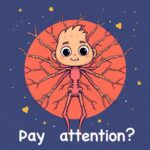

Activation is simply your nervous system saying:
“Something in the environment matters right now.”
Activation isn’t a flaw.
It’s not “overreacting.”
It’s not a psychological event.
Here’s how it happens.
1. Activation begins as a whisper, not a shout
Before anything dramatic happens, your body sends a tiny signal.
A micro‑tightening.
A shift in breath.
A flicker of heat.
A small drop in the stomach.
This is your system’s first language.
It’s like the wind changing direction before a storm — subtle, but meaningful.
2. The body scans for patterns, not logic
Your nervous system doesn’t analyze.
It recognizes.
It looks for:
- tones you’ve heard before
- expressions you’ve learned to track
- atmospheres that once required vigilance
- pacing that feels familiar
- silence that used to mean danger
- chaos that once needed managing
Activation happens when something in the present resembles something from the past.
The first thing that happens is physiological, not emotional.
Your body shifts before your mind names it.
That’s why you feel activation in:
- your chest
- your gut
- your breath
- your muscles
- your pulse
Your nervous system speaks physiologically first.
Your mind interprets it second.
Not consciously.
Physiologically.
3. Activation is the body preparing for movement
When your system senses something important, it shifts into readiness.
Not panic.
Not fear.
Readiness.
This can feel like:
- breath rising
- muscles tightening
- heart quickening
- attention narrowing
- energy rising or dropping
It’s your body saying,
“Do we need to move, speak, protect, or adjust?”
4. Activation is the body trying to protect alignment
This is the part most people miss.
Activation isn’t the body malfunctioning.
It’s the body trying to keep you aligned with what feels true, safe, or coherent.
When something threatens that coherence — even subtly — the system lights up.
It’s like a compass needle twitching when a magnet comes close.
Not danger.
Just information.
5. Activation grows when we override the first signals
If the whisper is ignored, the body speaks louder.
If the tightening is dismissed, the breath shifts.
If the breath is overridden, the chest tightens.
If the chest tightens and you push through, the whole system activates.
Not because you’re fragile.
Because your body is trying to get your attention.
Activation is the body insisting on being heard.
6. Activation is a request, not a reaction
Your system isn’t saying:
“Something is wrong.”
It’s saying:
“Something needs awareness.”
It might be:
- a boundary
- a truth
- a pace
- a need
- a mismatch
- a memory
- a pattern
- a pressure
Activation is the body asking for alignment.
7. Activation is full‑body, because the nervous system is full‑body
Since your nervous system runs through:
- your spine
- your organs
- your muscles
- your skin
- your breath
- your heartbeat
activation can show up anywhere.
It’s not “in your head.”
It’s in your whole system, because your whole system is wired to respond.
8. Activation ends when the body feels accurately met
Not when you calm down.
Not when you force stillness.
Not when you suppress the feeling.
Activation ends when the body senses:
“I’m aligned again.”
This can happen through:
- truth
- clarity
- boundary
- slowing down
- stepping back
- choosing differently
- being seen accurately
- being in the right environment
The body settles when the world matches what it knows.
The simplest way to say it
Activation is not a problem.
Activation is a message.
It’s your nervous system saying:
“Pay attention. Something here matters.”
And when you listen, the system doesn’t need to shout.